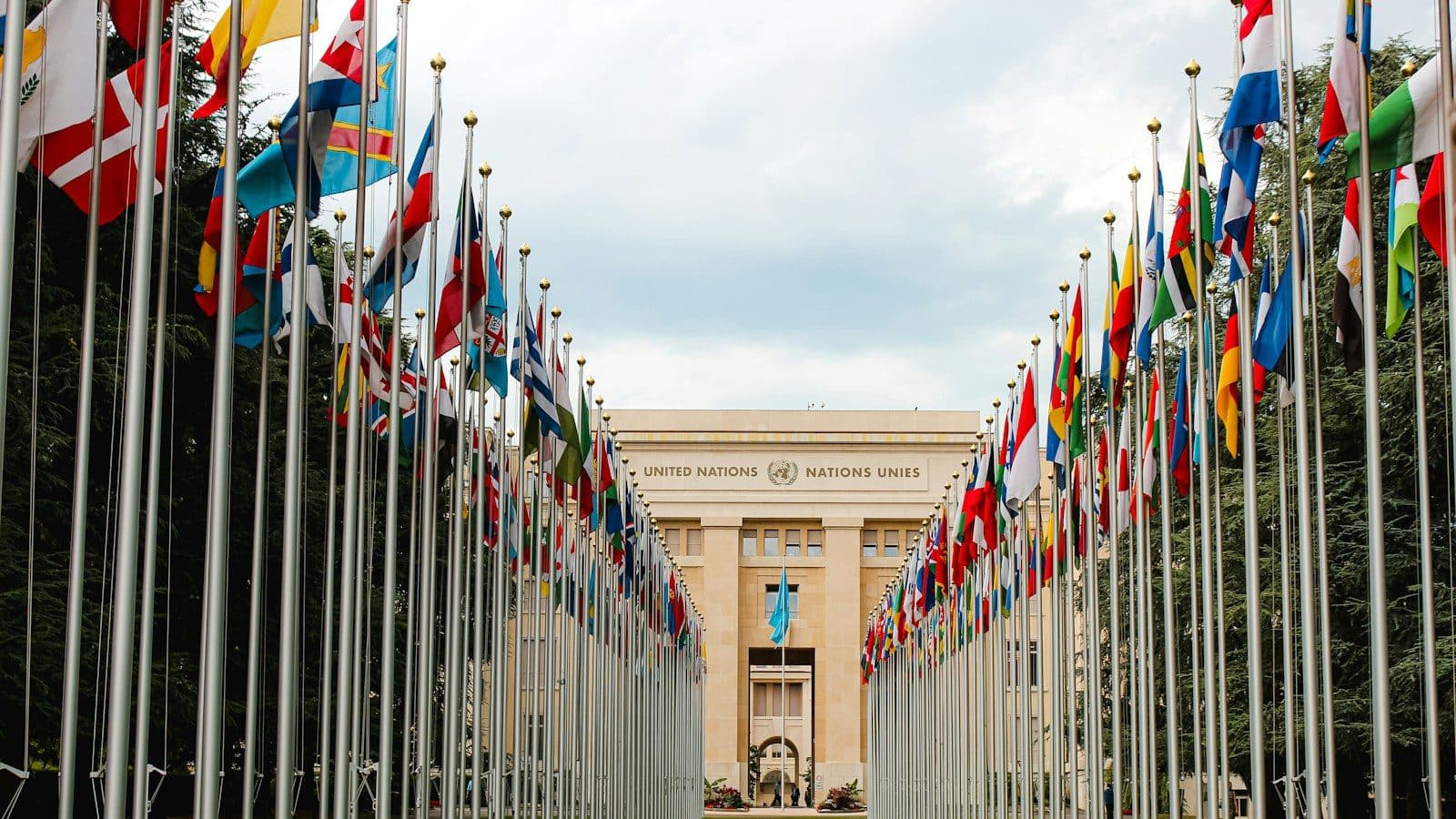

Belgium is the most trade-open country in Europe. With an exports-to-GDP ratio above 80%, the Belgian economy is structurally geared towards international trade. The country hosts the headquarters of the European Union, NATO, and more than 2,000 international organisations in Brussels. For a Belgian entrepreneur, this unique position offers exceptional opportunities to build international partnerships. This practical guide shows you how to identify, approach, negotiate and secure international partnerships by drawing on Belgian institutions and networks.
Why Belgium is an ideal hub for international partnerships
A strategic geographic position
Belgium sits at the crossroads of Western Europe, at the intersection of the Latin and Germanic worlds:
- EU capital: Brussels hosts the European Commission, the Council of the EU and the European Parliament, drawing thousands of decision-makers and lobbyists from around the world
- Diplomatic hub: more than 180 embassies and diplomatic missions in Brussels
- International business community: more than 1,200 multinational companies have their European headquarters in Belgium
- Accessibility: within 2 hours' flight of most European capitals, served by high-speed rail (Thalys, Eurostar, ICE)
A linguistic and cultural advantage
Belgian multilingualism is a major business asset:
- French: access to French-speaking markets (France, French-speaking Switzerland, French-speaking Africa, Quebec)
- Dutch: access to the Netherlands and Flanders
- German: access to Germany, Austria, German-speaking Switzerland
- English: widely spoken, the language of international business
Belgians are naturally used to navigating between cultures, which is a valuable asset in international negotiations.
Belgian institutions supporting internationalisation
Belgium has three regional foreign trade agencies, reflecting its federal structure, plus one federal body providing financial support.
AWEX (Walloon Export and Foreign Investment Agency)
Services for Walloon companies:
- Economic advisers: a network of more than 100 advisers in 90 countries, based in Belgian embassies and consulates
- Trade missions: 50 to 60 missions a year, on every continent, with subsidised participation (travel and accommodation costs partly covered)
- Export incentives:
- Prospecting grants: up to 50% of prospecting costs (travel, trade fairs, translation)
- Grants for participating in international trade fairs: up to 50% of stand costs
- Grant for hiring an export manager: up to EUR 20,000
- Support for CE marking and international certifications
Concrete example: Pierre, a maker of artisan chocolates in Namur, wants to export to Japan. AWEX arranges his participation in a trade mission at the Tokyo Salon du Chocolat. AWEX covers 50% of the stand cost (EUR 2,500 out of EUR 5,000) and puts Pierre in touch with an economic adviser based in Tokyo, who arranges 5 B2B meetings with Japanese importers.
Contact: awex.be – T. +32 (0)2 421 82 11
FIT (Flanders Investment & Trade)
Services for Flemish companies:
- International network: more than 90 offices worldwide
- Market prospecting: free or subsidised market research
- Princely and ministerial missions: high-level missions accompanied by members of the royal family or ministers
- Exportmanager programme: co-financing of an export manager for your SME (up to 50% of the salary for 2 years)
- KMO-portefeuille: using the SME portfolio for export training and advice
FIT grants:
| Grant | Amount | Conditions |
|---|---|---|
| Individual prospecting | Up to EUR 5,000 | First market in a country |
| International trade fair participation | Up to EUR 7,500 | 50% of the cost |
| Market study | Up to EUR 15,000 | New market |
| Exportmanager programme | Up to EUR 50,000/year | SME < 250 employees |
Contact: flandersinvestmentandtrade.com – T. +32 (0)2 504 87 11
hub.brussels (Brussels)
Services for Brussels companies:
- Export team: advisers specialised by geographic area
- Trade missions: 20 to 30 missions a year
- "Brussels International" programme: personalised support for exporting SMEs
- Export grants:
- Prospecting foreign markets: up to 50% of costs
- Participation in international trade fairs: up to 50% of the cost
- Translation of sales materials: partial coverage
Contact: hub.brussels – T. 1819 (free number)
Credendo (formerly ONDD)
Credendo is the Belgian export credit insurer, a federal body that protects Belgian companies against the risks associated with international trade.
Services:
- Export credit insurance: covers the risk of non-payment by a foreign client (commercial and political risk)
- Financing guarantees: guarantees bank loans linked to export contracts
- Investment insurance: protects Belgian investments abroad against political risks (expropriation, war, currency transfer restrictions)
Indicative pricing:
- Short-term credit insurance (< 2 years): 0.3 to 2% of the invoice amount
- Medium-term credit insurance (2–7 years): premium varies by country and amount
- Single risk (individual contract): from 0.5% of the amount
Concrete example: your company wins a EUR 200,000 contract with a client in Morocco. Credendo insures the non-payment risk for a premium of 1.5%, or EUR 3,000. If the client fails to pay (bankruptcy, default), Credendo reimburses you up to 90% of the amount, or EUR 180,000.
Contact: credendo.com – T. +32 (0)2 788 88 00
Types of international partnerships
Distribution partnership
The most common model for entering a foreign market:
Commercial agent:
- Represents your company in a foreign country
- Does not take ownership of the goods
- Paid on commission (generally 5 to 15% of the turnover generated)
- Contract governed by the Belgian law of 13 April 1995 on the commercial agency contract (transposing European directive 86/653/EEC)
- Caution: mandatory termination indemnity if the relationship ends (typically 1 to 3 years of commissions)
Distributor (importer):
- Buys your products and resells them in their market
- Takes ownership of the goods (and the stock risk)
- Distributor margin: generally 20 to 50% depending on the sector
- Contract governed by the Belgian law of 27 July 1961 on exclusive sales concessions (very protective of the dealer under Belgian law)
- Caution: under Belgian law, terminating an exclusive sales concession entitles the dealer to reasonable notice and a compensatory indemnity (which can reach several years of gross margin)
Joint venture (shared company)
Setting up a joint legal entity with a foreign partner:
- Advantages: shared risk, access to the local market, pooling of skills
- Disadvantages: legal complexity, risk of governance conflict, shared profits
- Typical structure: a local company (SRL, SA or foreign equivalent) with a capital split (e.g. 51/49% or 50/50%)
- Joint-venture agreement: a detailed document covering governance, contributions, profit-sharing and exit terms
Licensing and franchising
Licensing:
- You grant a foreign partner the right to use your technology, patent, brand or know-how
- Paid via royalties: typically 3 to 10% of turnover or a fixed amount
- Low investment on your part, but less control
Franchising:
- A more structured model: you supply the brand, the concept, the know-how and the training
- The franchisee invests in and runs the business locally
- Entry fee (EUR 25,000 to 100,000 depending on the concept) + monthly royalty (3 to 8% of turnover)
- Belgian Franchise Federation (FBF): a source of information and best practice
International subcontracting
- Production subcontracting: having all or part of your products manufactured abroad (Asia, Eastern Europe)
- Service subcontracting: outsourcing certain services (IT, customer support, back office) internationally
- Subcontracting contract: clearly define specifications, deadlines, penalties, intellectual property and confidentiality
How to identify and select an international partner
Finding the right partner is the step that determines whether your international partnerships succeed or fail, so treat it with the same rigour as any major investment.
Phase 1: Prior market research
Before looking for a partner, get to know the target market:
- Macroeconomic analysis: GDP, growth, political stability, exchange rates, regulation
- Sector analysis: market size, local competition, trends, barriers to entry
- Cultural analysis: business practices, negotiation style, the importance of personal relationships
Free tools:
- Credendo: country factsheets assessing political and commercial risk
- AWEX / FIT / hub.brussels: sector market studies
- Trade Map (International Trade Centre): import/export data by country and product
- FPS Economy: Belgian foreign trade statistics
- World Bank: the "Doing Business" ranking
Phase 2: Identifying potential partners
Prospecting channels:
| Channel | Advantages | Cost |
|---|---|---|
| Trade missions (AWEX, FIT, hub.brussels) | Qualified contacts, institutional support | Subsidised (50%) |
| International trade fairs | Direct meetings, visibility | EUR 3,000 to 15,000/fair |
| Belgian economic advisers abroad | Free, local knowledge | Free |
| LinkedIn and professional social networks | Broad reach, precise targeting | Free to EUR 800/month |
| Bilateral chambers of commerce | Structured network, events | EUR 200 to 1,000/year |
| B2B platforms (Alibaba, Europages, Kompass) | Volume of contacts | Free to EUR 5,000/year |
Bilateral chambers of commerce in Belgium:
- Belgian-French Chamber of Commerce (CCFB)
- Belgian-Luxembourg Chamber of Commerce (CCBLM)
- British Chamber of Commerce in Belgium
- American Chamber of Commerce in Belgium (AmCham)
- Belgian-African Chamber of Commerce (CBL-ACP)
- Arab-Belgian-Luxembourg Chamber of Commerce
Phase 3: Due diligence (prior verification)
Due diligence is what separates durable international partnerships from costly mistakes. Before signing, check your prospective partner:
Essential checks:
- Financial solvency: request annual accounts, consult databases (Graydon, Dun & Bradstreet, Creditsafe)
- Business reputation: customer references, track record, online presence
- Operational capacity: visit the premises and facilities (essential!)
- Legal compliance: check there are no international sanctions (EU lists, OFAC), history of fraud or bankruptcy
- Intellectual property: check the partner has no ongoing disputes or conflicting trademarks
Cost of due diligence:
- Light due diligence (credit report, basic check): EUR 200 to 500
- Standard due diligence (detailed report, reference checks): EUR 2,000 to 5,000
- In-depth due diligence (on-site audit, legal review): EUR 5,000 to 20,000
Securing the partnership: legal aspects
The international partnership agreement
An international partnership contract must cover, at minimum:
- Identification of the parties: company name, registered office, company number, legal representative
- Purpose of the partnership: a precise description of each party's rights and obligations
- Territory: geographic scope of the partnership (exclusive or non-exclusive)
- Duration: fixed or indefinite term, renewal conditions
- Financial terms: price, commissions, royalties, payment terms, currency, Incoterms
- Intellectual property: use of trademarks, patents, copyright, non-compete clause
- Confidentiality: NDA (non-disclosure agreement)
- Governing law: which national law governs the contract?
- Dispute resolution: arbitration (ICC, CEPANI) or competent courts
- Exit clauses: termination conditions, notice, indemnities, post-contractual non-compete
Choosing the governing law and jurisdiction
Common options for Belgian companies:
- Belgian law: if you are in a strong negotiating position
- The partner's law: if the partner requires it (a local lawyer should be consulted)
- Vienna Convention (CISG): applies by default to international sale-of-goods contracts between signatory countries (Belgium included)
- Neutral law: parties sometimes choose Swiss or English law as a compromise
Dispute resolution: arbitration vs courts
International arbitration (recommended):
- CEPANI (Belgian Centre for Arbitration and Mediation): a Belgian arbitration institution, moderate cost, expertise in international trade. Seat: Brussels. Cost: fee scale based on the amount in dispute (e.g. around EUR 15,000 for a EUR 200,000 dispute)
- ICC (International Chamber of Commerce): the benchmark for international arbitration, based in Paris. Higher cost but globally recognised
- Advantages of arbitration: confidentiality, speed (6 to 18 months), international enforceability (1958 New York Convention), choice of arbitrators
Belgian courts:
- The Enterprise Court (formerly the Commercial Court)
- Advantage: lower cost
- Disadvantage: longer timeframes (12 to 36 months), public rulings
Protecting intellectual property internationally
Before sharing your brand or technology with a foreign partner:
- Trademark: register your trademark in the target countries (WIPO for an international trademark via the Madrid Protocol, EUIPO for an EU trademark)
- Patent: file your patents via the EPO (European Patent Office in Munich) or the PCT (Patent Cooperation Treaty) for international protection
- Copyright: automatic protection in Belgium and the EU, but formalise usage licences by contract
- Trade secrets: an NDA (non-disclosure agreement) before any sensitive discussion
Cost of trademark registration:
| Territory | Body | Cost |
|---|---|---|
| Belgium / Benelux | BOIP (Benelux Office) | EUR 244 (1 class) |
| European Union | EUIPO | EUR 850 (1 class) |
| International | WIPO (Madrid) | CHF 653 + per-country designation |
Incoterms 2020: rules for international trade
Incoterms (International Commercial Terms) define how costs and risks are shared between seller and buyer in an international transaction. The most commonly used:
| Incoterm | Meaning | Seller's risk | Transport |
|---|---|---|---|
| EXW | Ex Works | Minimal | Buyer |
| FOB | Free On Board | Up to the port of loading | Shared |
| CIF | Cost, Insurance, Freight | Up to the port of destination | Seller |
| DAP | Delivered At Place | Up to the destination | Seller |
| DDP | Delivered Duty Paid | Maximal (customs included) | Seller |
Tip: for a Belgian SME starting out internationally, begin with EXW (your risk is minimal, the partner organises transport) or DAP (you organise everything up to delivery, the partner handles customs clearance).
Financing international operations
Cash flow is often the first casualty of international partnerships if payment terms and currency risk are not planned for in advance.
Documentary credits (letters of credit)
The most secure payment method for international trade:
- The client's bank undertakes to pay the seller once compliant documents are presented
- Cost: 0.5 to 2% of the amount
- Recommended for the first contracts with a new partner, especially in higher-risk countries
International factoring (export factoring)
- You assign your export invoices to a factor who pays you immediately (80 to 90% of the amount)
- The factor handles collection from your foreign client
- Cost: 1 to 3% of the invoice amount
- Factoring companies in Belgium: BNP Paribas Fortis Factor, KBC Commercial Finance, Belfius Commercial Finance, ING Commercial Finance
Export credit insurance (Credendo)
As mentioned above, Credendo covers the risk of non-payment (commercial and political). Combined with a documentary credit, it is the most secure formula for exports to higher-risk markets.
Common mistakes to avoid
Most failed international partnerships can be traced back to one of the following avoidable mistakes:
- Not checking the partner: due diligence is non-negotiable. Do not rely on appearances or verbal recommendations
- Signing a vague contract: every aspect of the partnership must be written and detailed. "We'll figure it out" is not a legal clause
- Overlooking cultural differences: negotiation practices vary enormously from one country to another (punctuality, hierarchy, decision-making, personal relationships)
- Forgetting intellectual property: register your trademarks and patents BEFORE sharing them with a partner
- Underestimating costs: prospecting, travel, translation, product adaptation, regulatory compliance. Budget for entering a new market: EUR 20,000 to 100,000 minimum
- Trying to do everything alone: use the free or subsidised resources available (AWEX, FIT, hub.brussels, Credendo)
Conclusion
Belgium offers an exceptional framework for building international partnerships: a central geographic position, multilingualism, effective support institutions (AWEX, FIT, hub.brussels, Credendo) and a diverse industrial fabric. The key to success lies in methodical preparation (market research, due diligence, a solid contract), making use of the available support and networks, and the patience needed to build lasting business relationships. The most successful international ventures are rarely the result of chance, but of a well-prepared, well-executed strategy.